Our Story
Built for people who never touched a manual dial before.
Hemisi Sosihe started as a small weekend workshop for adults who wanted to stop shooting on auto and never quite knew where to begin. The structure that grew out of those sessions, weekly practice plus peer review, is still the backbone of the program today.
Where It Started
Fewer lectures, more film rolls and memory cards.
The original workshops were run out of a rented studio room with a handful of adults who owned a camera but rarely used anything beyond the green auto icon. Rather than opening with sensor sizes or lens glossaries, sessions opened with a single question: what are you trying to show someone with this photo? That question became the organizing principle for every module that followed. Composition, lighting and editing were taught as tools for answering it, not as subjects on their own.
Teaching Philosophy
Four principles guide how every module is written.
Practice before theory
Concepts are introduced through a shooting task first. Terminology gets attached to something students have already tried, not the other way around.
Feedback beats grading
There are no letter grades. Peer feedback and short instructor notes describe what an image is doing and what a different choice might change.
Gear stays secondary
Assignments are written to work with any camera or phone capable of manual or semi-manual control. Upgrading equipment is never a prerequisite.
Style is discovered, not assigned
Rather than telling students what their style should look like, the program builds in regular review points where patterns in their own work become visible.
Instructors
People who shoot, review and teach in that order.
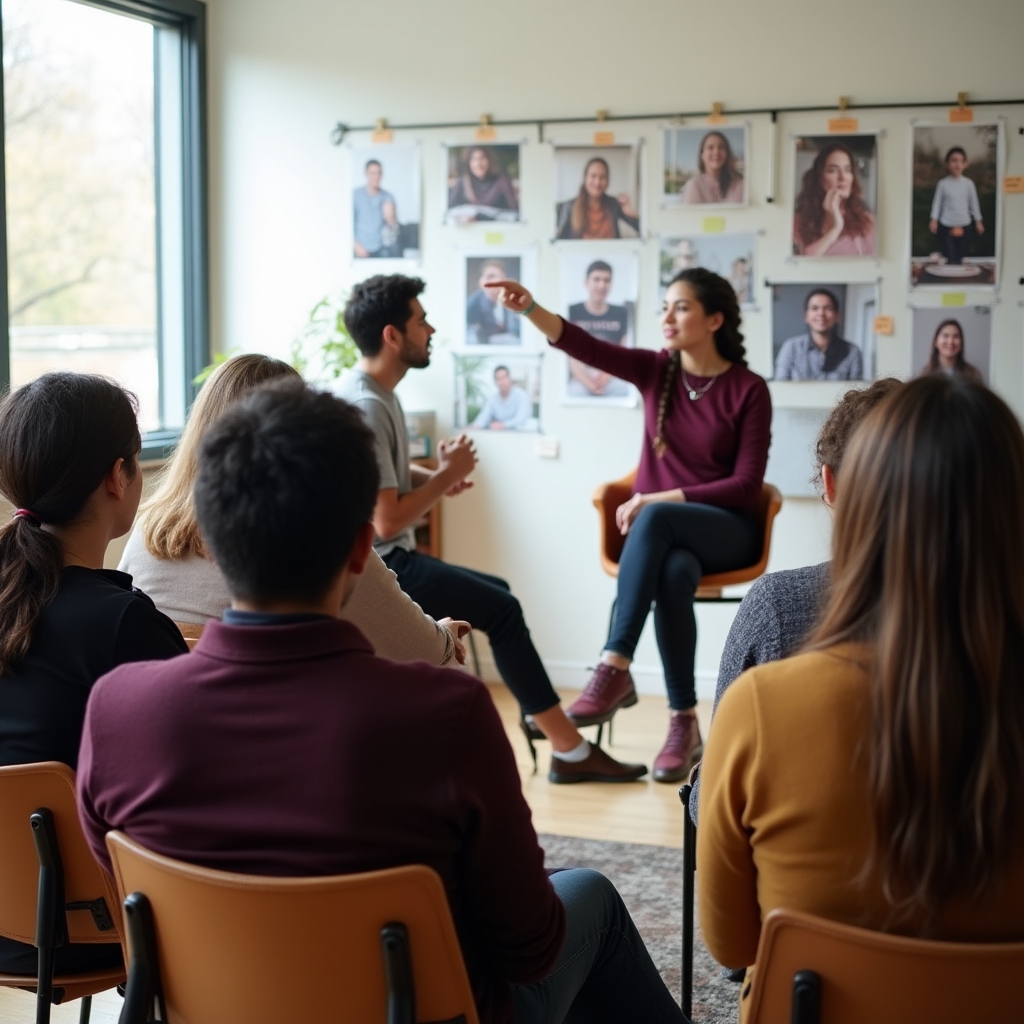
Instructors come from editorial, documentary and portrait backgrounds and continue to shoot outside the classroom. Their role in the program is closer to a workshop facilitator than a traditional lecturer. They set weekly assignments, monitor feedback circles for tone and clarity, and step in with a technical note when a peer group gets stuck on something like a metering question. Class sizes stay small enough that instructors can read most submissions across a session.
The program does not lead to a professional certification or industry license, and it is not positioned as one. It is built for people developing a personal or creative photography practice, whether that means better travel photos, a stronger eye for composition, or simply more confidence stepping outside of auto mode.
Still weekly. Still practical.
Cohorts have grown from a single studio room to sessions offered across several US regions and online, but the format has not changed much. Students still get a weekly brief, still shoot on their own schedule, and still hand their work to peers before an instructor ever sees it. That order matters more than any single lecture.
See Current Availability